
By Sharon Rude
My husband and I took a day trip to Maquoketa Caves State Park on April 10.
I’m not a fan of caves unless I can see daylight, but I was intrigued by the variety of spring ephemerals along the woodland trails. A majority of the rocks and logs were covered in moss and occasional fungi.
As a reminder to visitors, the caves are closed from November 15 through April 1, and No Trespassing signs are posted to allow the hibernating bats living there to remain undisturbed. There is a $135.50 trespassing fine from the Iowa Department of Natural Resources.
Five of Iowa’s nine bat species hibernate in these caves. Disturbing their hibernation makes the bats burn calories they cannot replace, since their insect food source is not present.
(Photos by Sharon Rude)
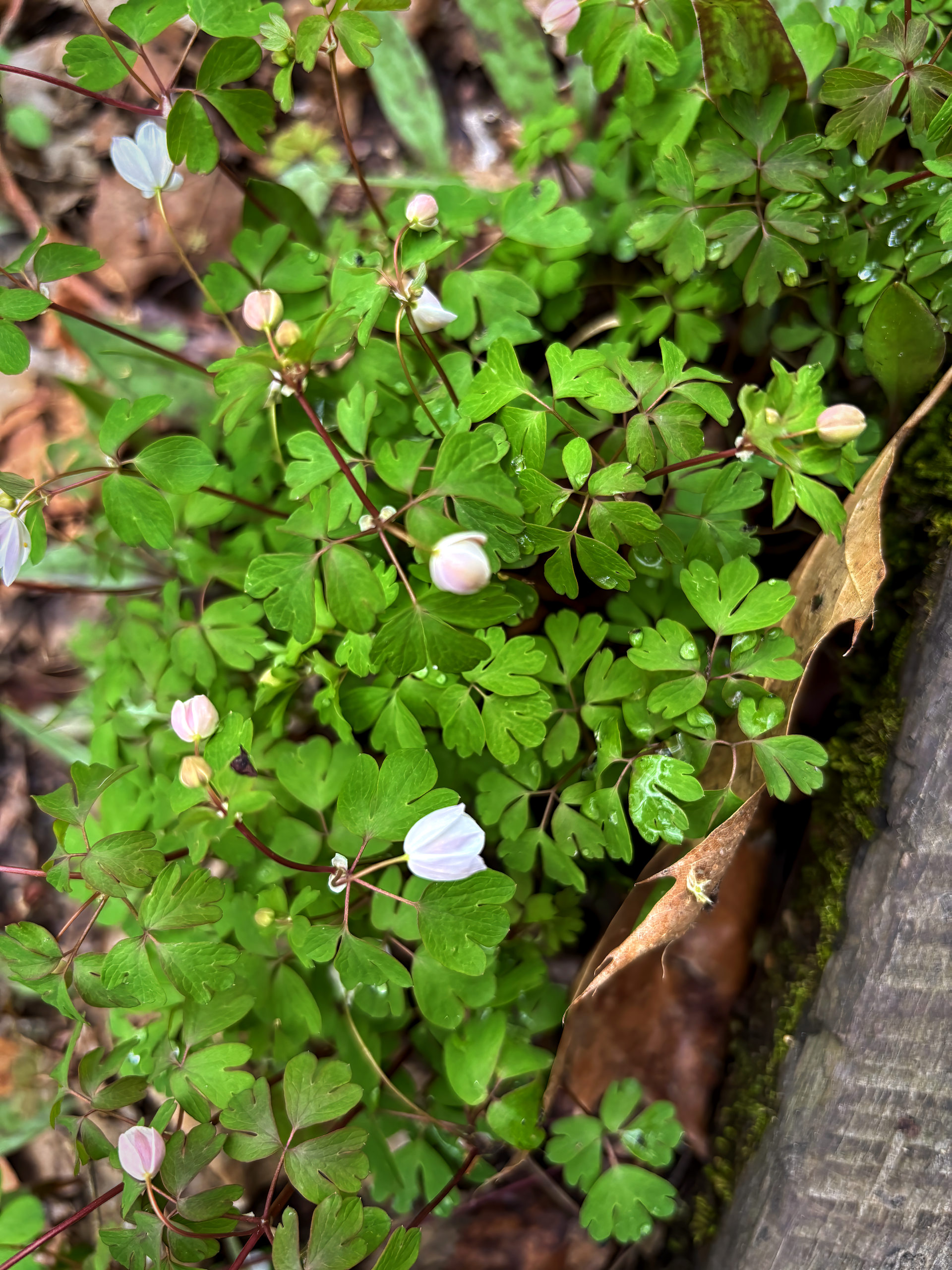
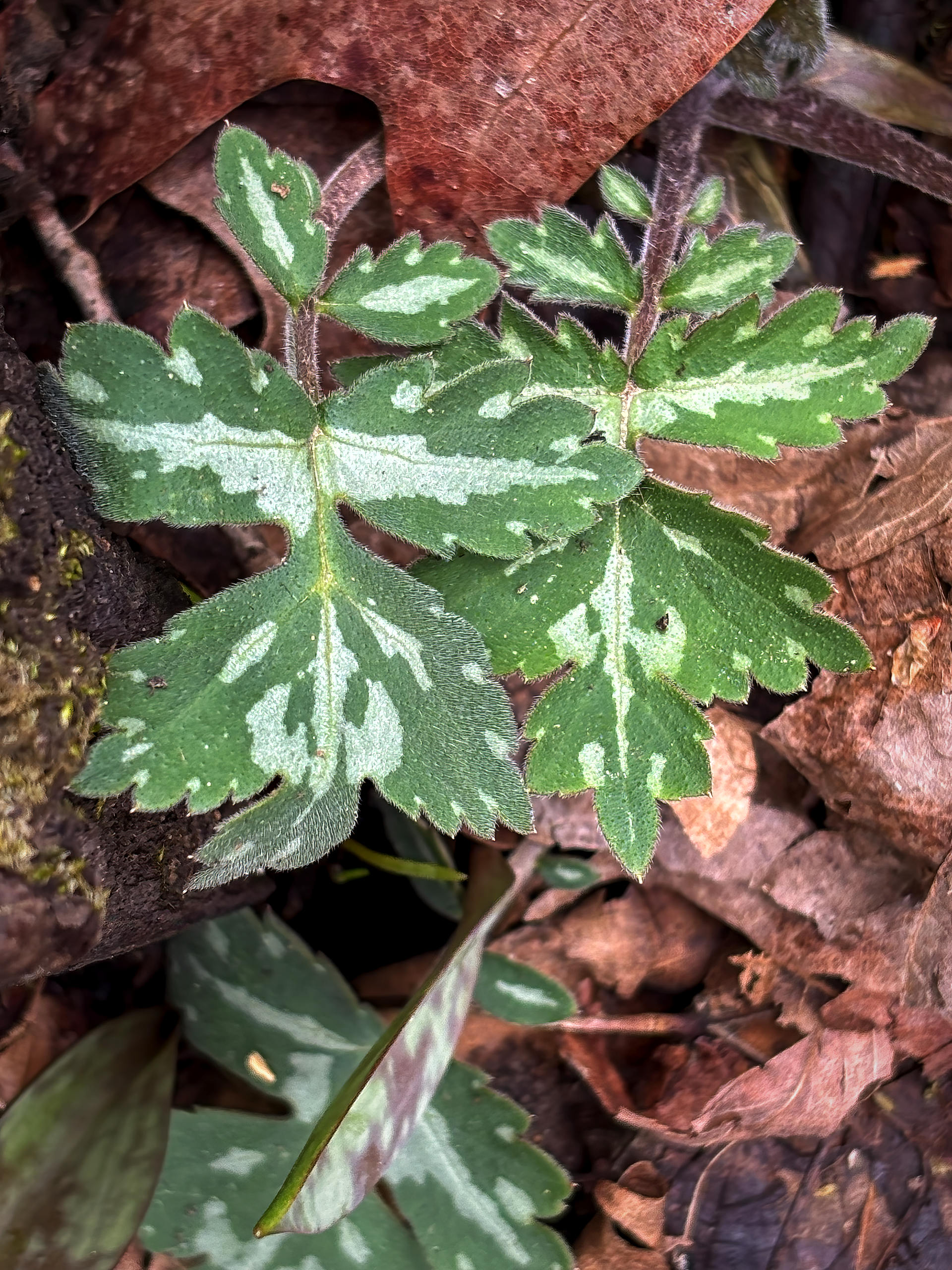
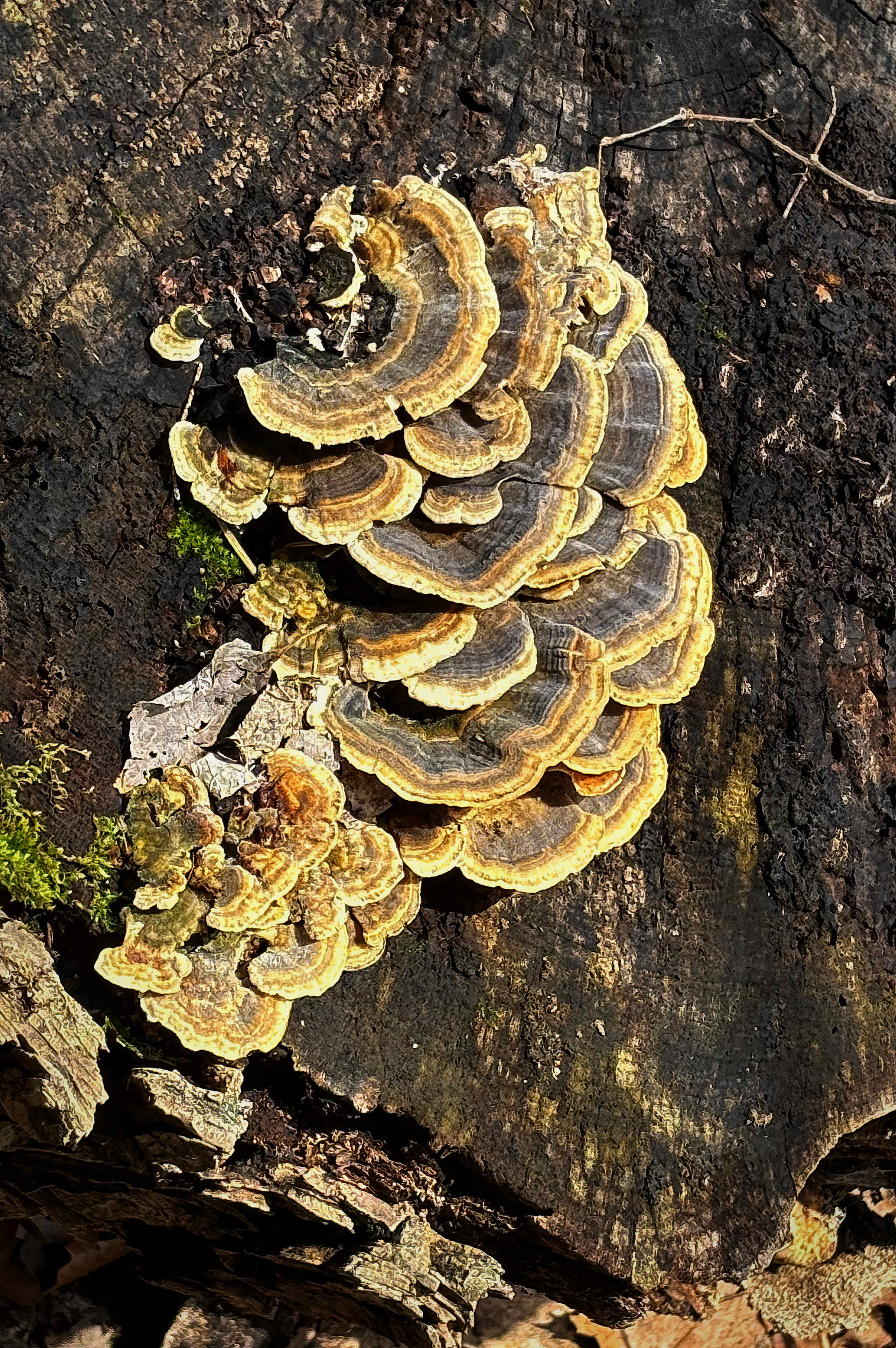
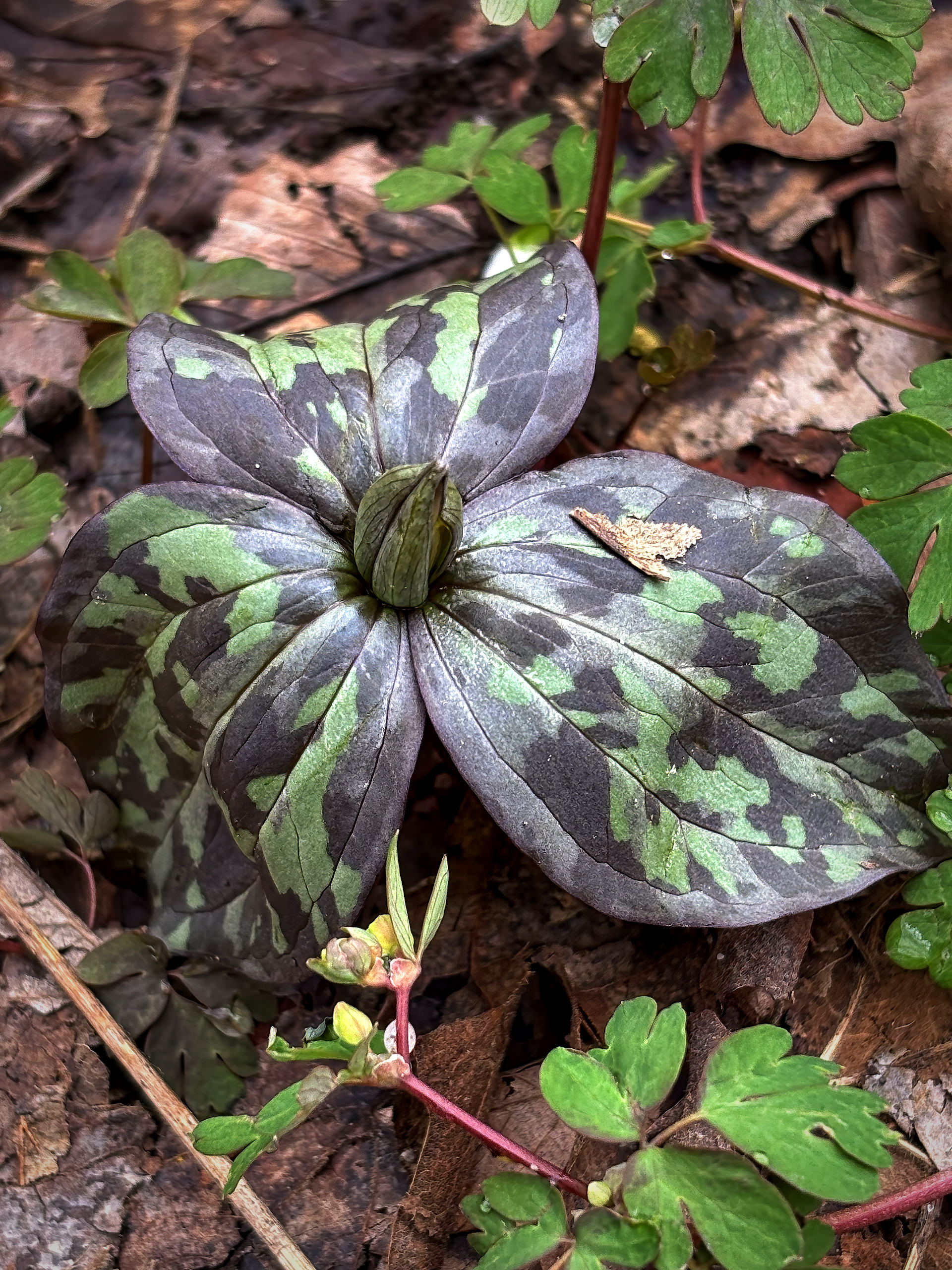
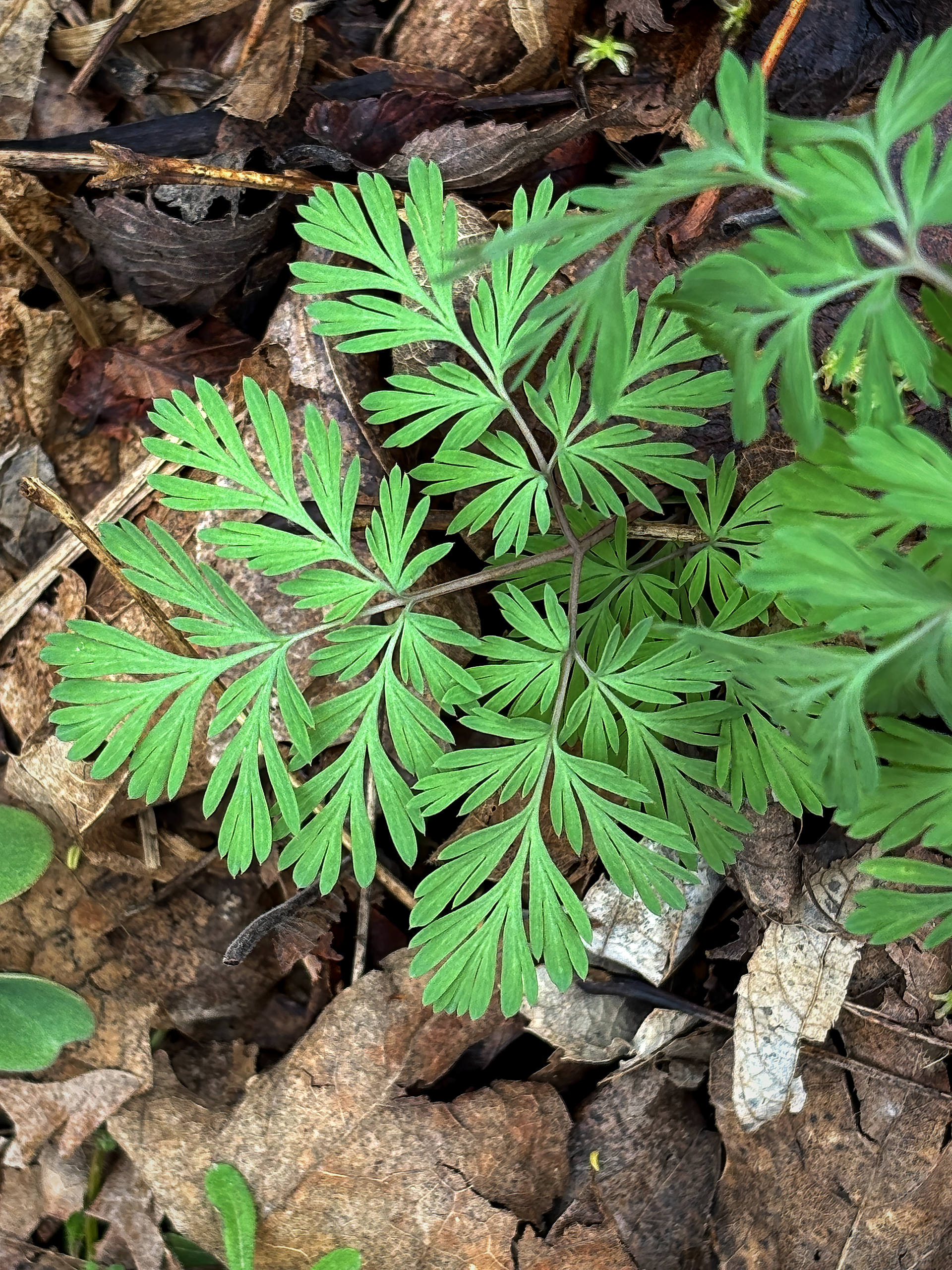
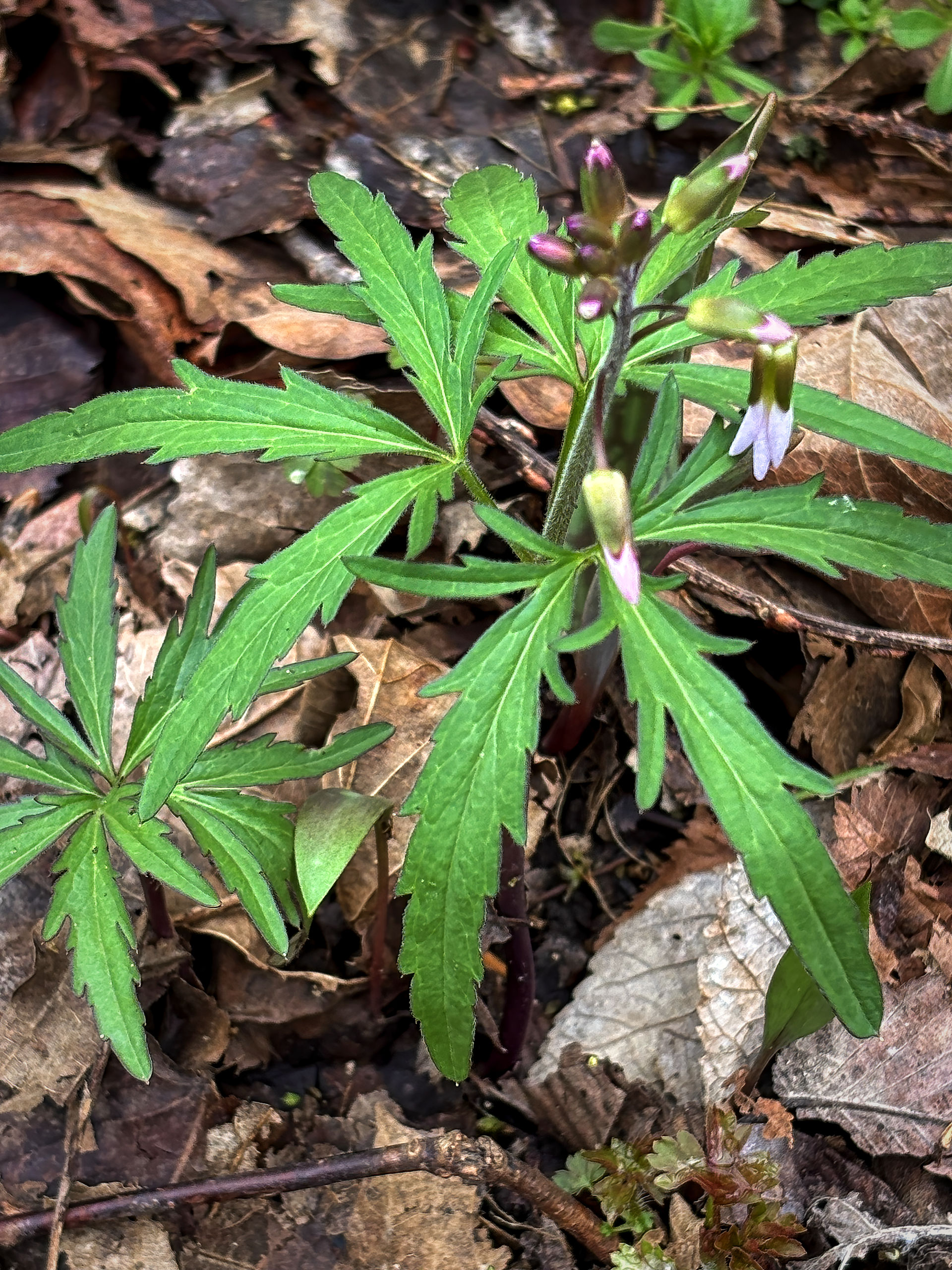
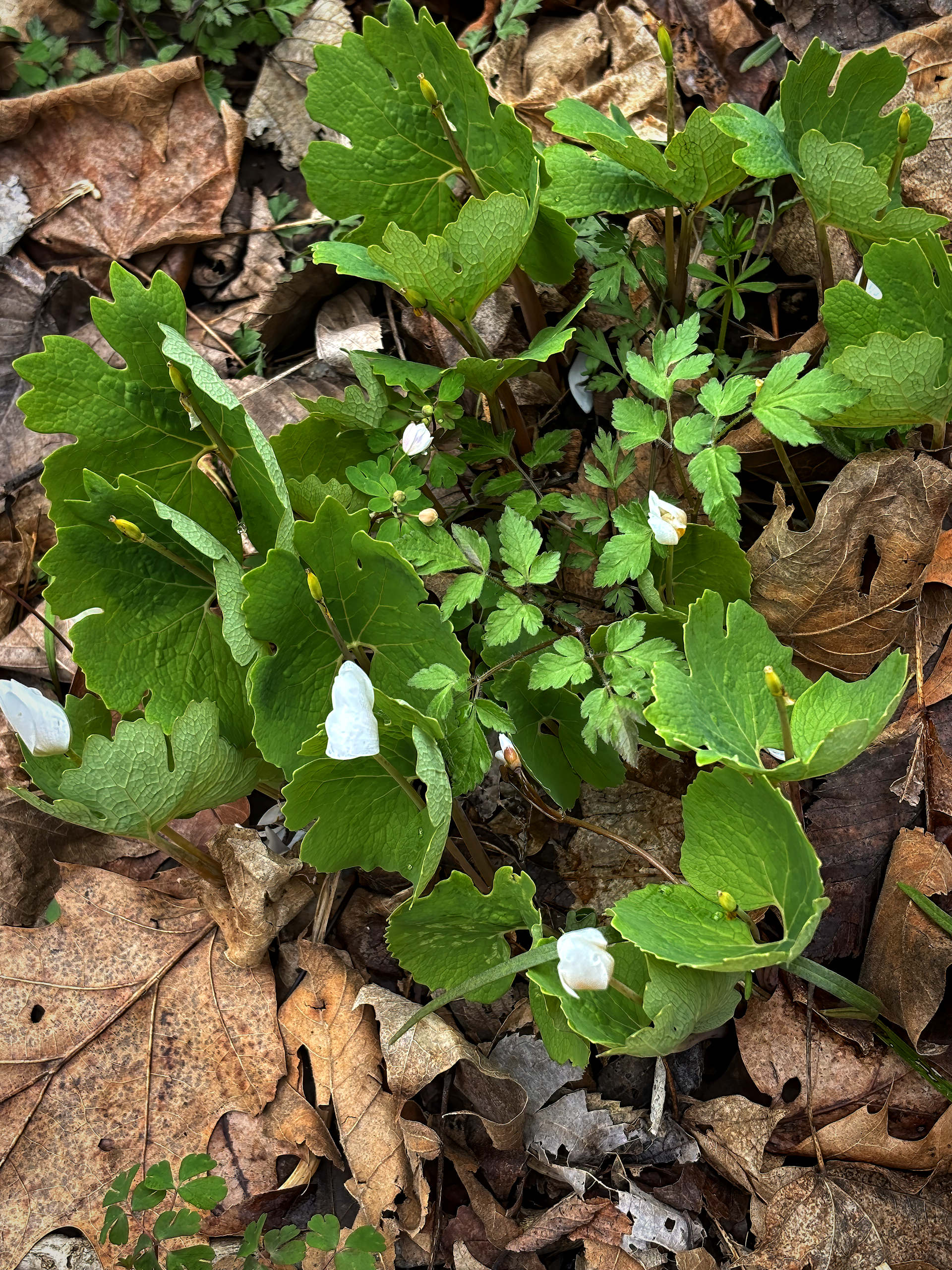
Top Row (left to right) Enemion biternatum (False rue anemone) is a spring ephemeral native to moist deciduous woodlands in the eastern and central U.S. This perennial herb’s leaves shoot up in fall and its flower stems in spring before going dormant in late spring after the seed ripens. Hydrophyllum virginianum (Virginia waterleaf) – also called eastern waterleaf, as it is an herbaceous perennial native to eastern North America, and found primarily in the Midwest, Northeast, and Appalachia. Trametes versicolor (Turkey tail) is a bracket mushroom that grows in tiered layers on dead logs and stumps of hardwood trees, such as beech or oak trees.
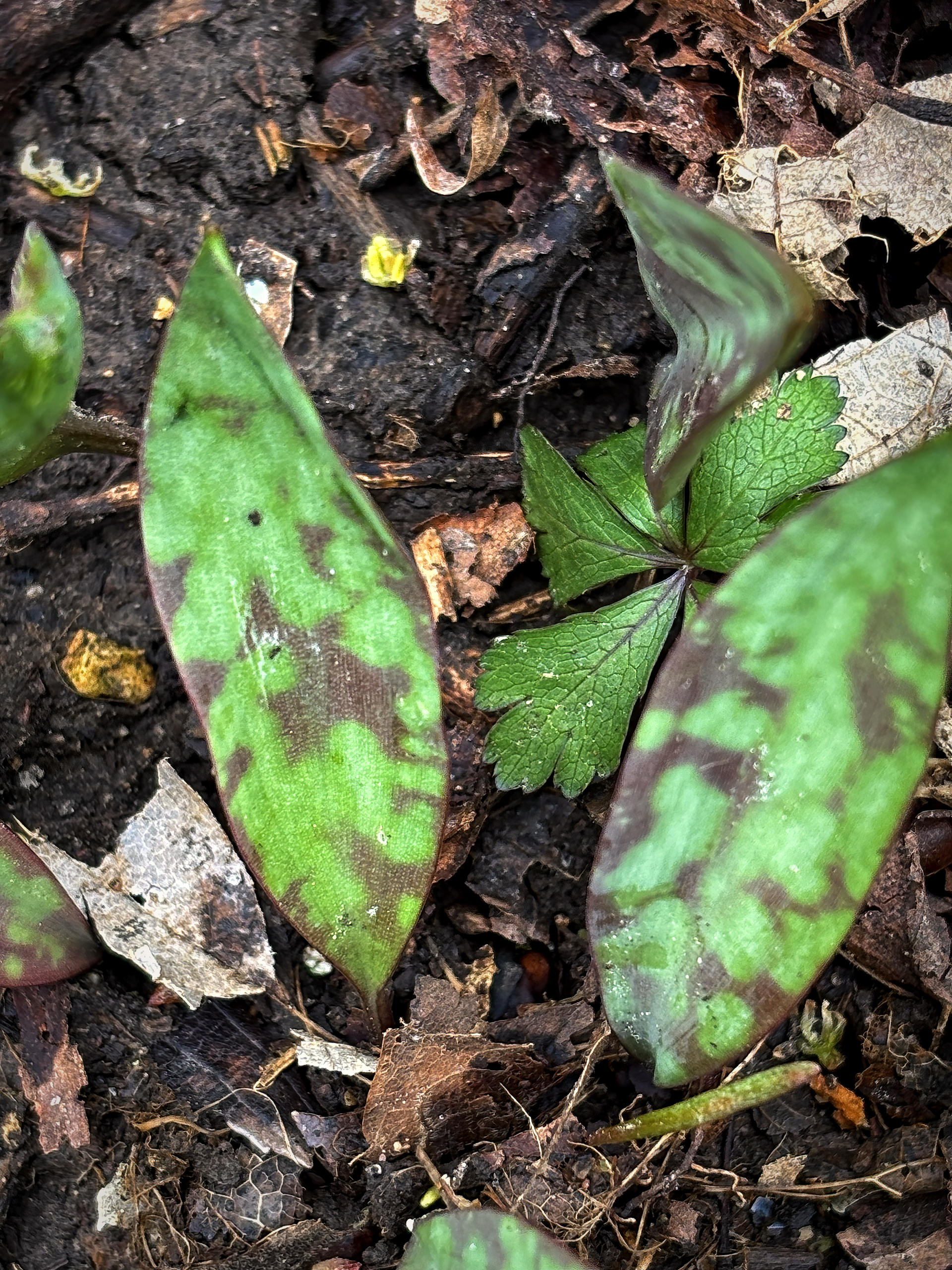
Middle Row (left to right) Erythronium albidum (White trout lily) is North American spring ephemeral with pewter-green leaves, each highlighted with liver-colored spots. Trillium sessile (Toadshade) is a small, spring perennial that grows widely across the central U.S. in humus-rich, moist woodlands. Its stemless flowers have upright maroon petals that emit a foul smell that attracts flies and beetles for pollination. Dicentra cucullaria (Dutchman’s breeches) is a spring woodland ephemeral species, blooming in early April and going dormant by mid-May.
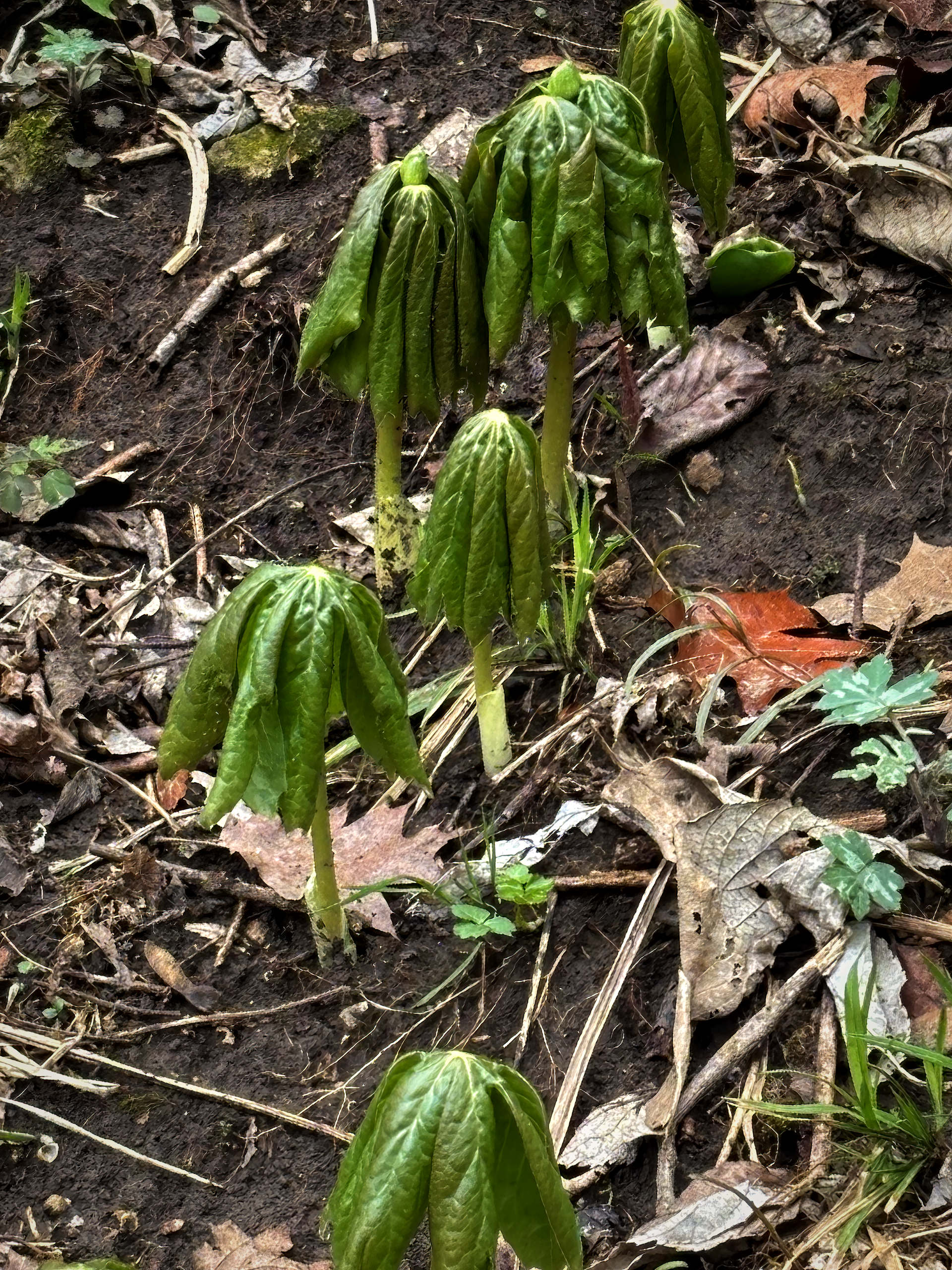
Bottom Row (left to right) Cardamine concatenata (Cut-leaf Toothcup) is a native, spring-ephemeral wildflower found in eastern North American (and Iowa’s) woodlands, blooming in April to May. Sanguinaria canadensis (Bloodroot) is a perennial, herbaceous plant native to eastern North American woodlands. Its white blooms appear briefly in early April, attracting early-flying bees and flies. Podophyllum peltatum (Mayapple) is a North American herbaceous perennial sometimes called Umbrella plant, with its leaves unfurling in spring to shelter a white flower.

