
By Angela Lambertz
Long before I brought a desktop hydroponics unit into my home, I learned an important lesson: edible plants don’t need soil to grow if they’re given the right conditions.
In 1999, I volunteered at a horticulture conference where speakers shared how rural elementary schools grew tomatoes using only seeds, water, discarded wooden pallets, and black plastic trash bags. The soil around the community was too contaminated to grow healthy food. With donated seeds and student care, those simple systems produced fresh food for both the school and the community.
The passion and empowerment behind those projects inspired me. I wanted to learn how to grow food locally and help others do the same.
During graduate school, I helped research the light requirements for growing basil in controlled environments, including those used on the International Space Station. My work was largely funded by the NASA Graduate Student Research Program, and I had the opportunity to present my research at a horticulture conference in Orlando, Florida. While there, I toured the Life Sciences unit at the Kennedy Space Center and saw firsthand how light, liquid nutrients, and temperature alone can sustain healthy plants.
Why Home Hydroponics?
Home hydroponics enables growing fresh greens year-round with minimal space and fewer pest issues. While fungus gnats still appear occasionally, I’ve found overall pest pressure to be much lower than with soil-grown plants. This past winter, I successfully grew multiple rounds of chard, cilantro, and kale, going from seed to harvest in three to four weeks.
Chard and cilantro have been especially reliable. One unexpected joy has been harvesting cilantro only as I need it – no more unused bunches decomposing in the refrigerator.
My Desktop System Setup
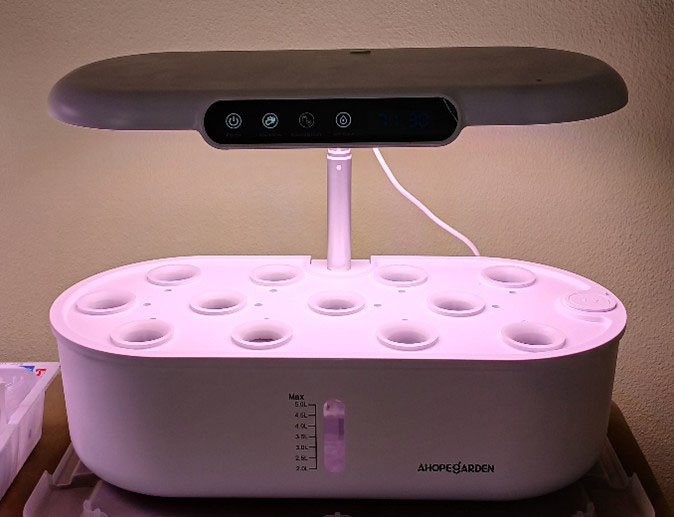
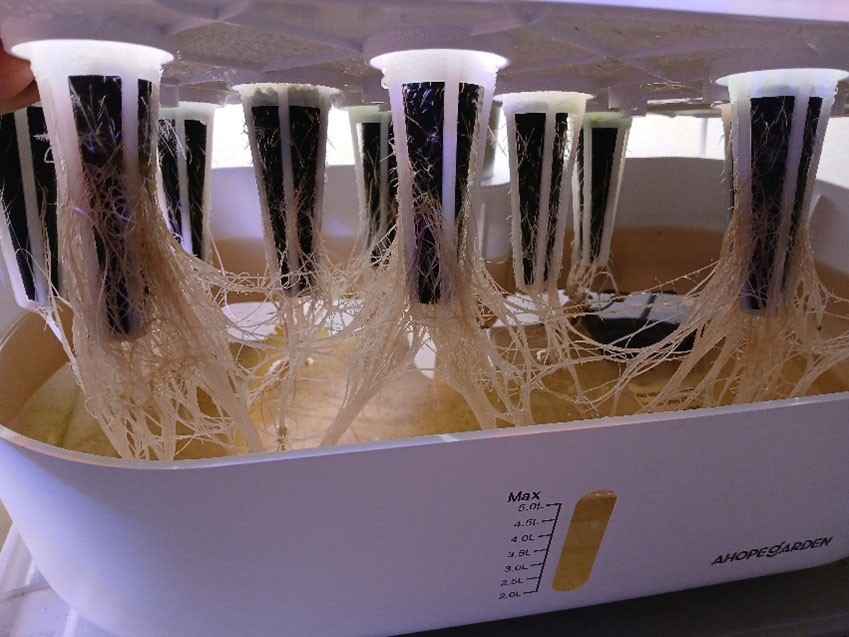
The desktop hydroponics unit I use holds 12 pods spaced about two inches apart and runs LED lights on a 16-hours-on, 8-hours-off cycle. The water reservoir holds roughly five liters, with a pump that circulates water for a few minutes every hour. Around Week 3, I add a small desk fan for several hours a day to create gentle air movement, which helps strengthen plant cell walls.
A liquid nutrient solution with a pH buffer is added every 10-12 days, and the reservoir is topped off with filtered water as needed.
A Pleasant Surprise
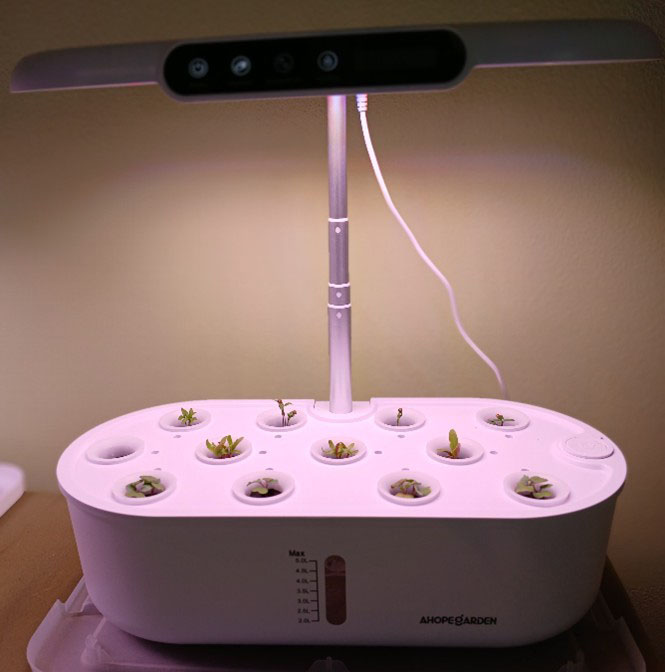
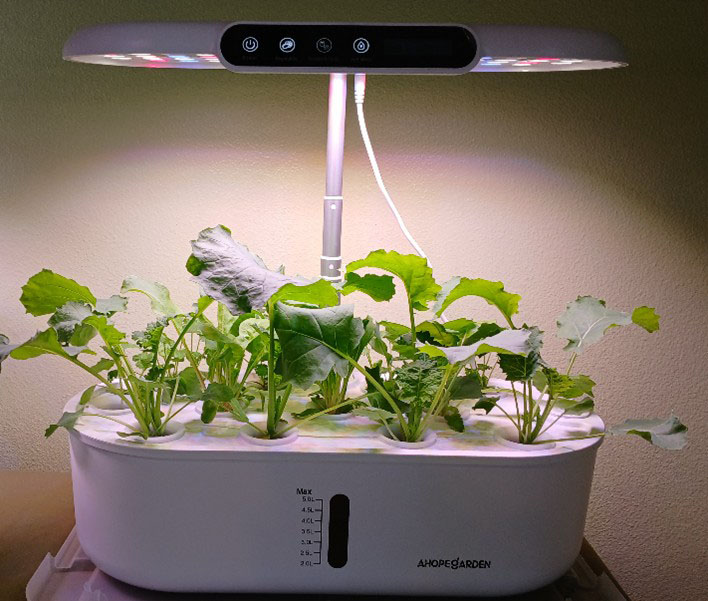
I’ll admit I was skeptical when I first purchased this desktop system. The promotional photos showing overflowing greens, tomatoes, and flowers seemed a little too good to be true. I bought the unit mainly as a winter distraction, not with high expectations. But by the fourth week, I had a picture-perfect harvest of chard that could easily appear in an advertisement for the unit. It truly surprised me.
I now plan to use this system year-round because it’s simple, efficient, and empowering.
Looking Ahead
One of my long-term dreams is to rent a warehouse and grow hydroponic fresh greens like cilantro, chard, kale, and leaf lettuce, to give them away to the community. Whether large-scale or desktop-sized, hydroponics offers a practical way to grow nutritious food locally, even when outdoor gardening isn’t possible.
And really, how awesome is it to harvest fresh greens in winter?
.***
Additional Info & Resources:
The desktop-sized DWC (deep water culture) hydroponics growing unit: Ahopegarden Hydroponics Growing System kit
Liquid nutrient solution (NPK: 4-3-6): Hydroponic Nutrients for Edible Plants
My graduate research work was published in HortScience: Sweet Basil Requires an Irradiance of 500 μ mol·m−2·s−1 for Greatest Edible Biomass Production
Deep water culture hydroponics basics: Homestead & Gardens’ DWC Hydroponics for Beginners (Full Step-by-Step Guide)

