By Linda Schreiber
Fall flowers do more than brighten the garden – they fuel pollinators when they need it most.
As summer winds down, many gardeners are ready to call it a season, especially after a hot summer. But late-season blooms provide nectar that butterflies and other insects rely on for migration, reproduction, and winter survival.
Monarchs undertake their extraordinary migration to central Mexico and depend on nectar-rich flowers along the way. Every garden can serve as a small “Homegrown National Park,” providing vital refueling stops during these butterflies’ journey.
“Leave the leaves” to provide critical winter shelter for pollinators, insulate plant roots, and enrich the soil with natural organic matter. Many butterflies and bees spend the winter as eggs, larvae, pupae, or adults by hiding in leaf litter. In many native bee and bumblebee colonies, only fertilized queens survive the winter to establish new nests the following spring.
Outstanding native fall bloomers include:
- Smooth asters (Symphyotrichum laeve) with their rich blue flowers.
- Other native asters (Symphyotrichum spp.) are among the best September nectar plants.
- Goldenrods (Solidago spp.) are often unfairly blamed for allergies when ragweed is the real culprit.
- Joe Pye weed (Eutrochium spp.) showcases tall pink-purple flower clusters to attract butterflies throughout late summer and early fall.
- Anise hyssop (Agastache foeniculum) is a favorite of bees, butterflies and hummingbirds.
While native plants provide the greatest ecological value because they support pollinators and many native insects, some ornamental cultivars, such as Autumn Joy sedum (Hylotelephium) and lantana (Lantana camara), also provide abundant late-season nectar.
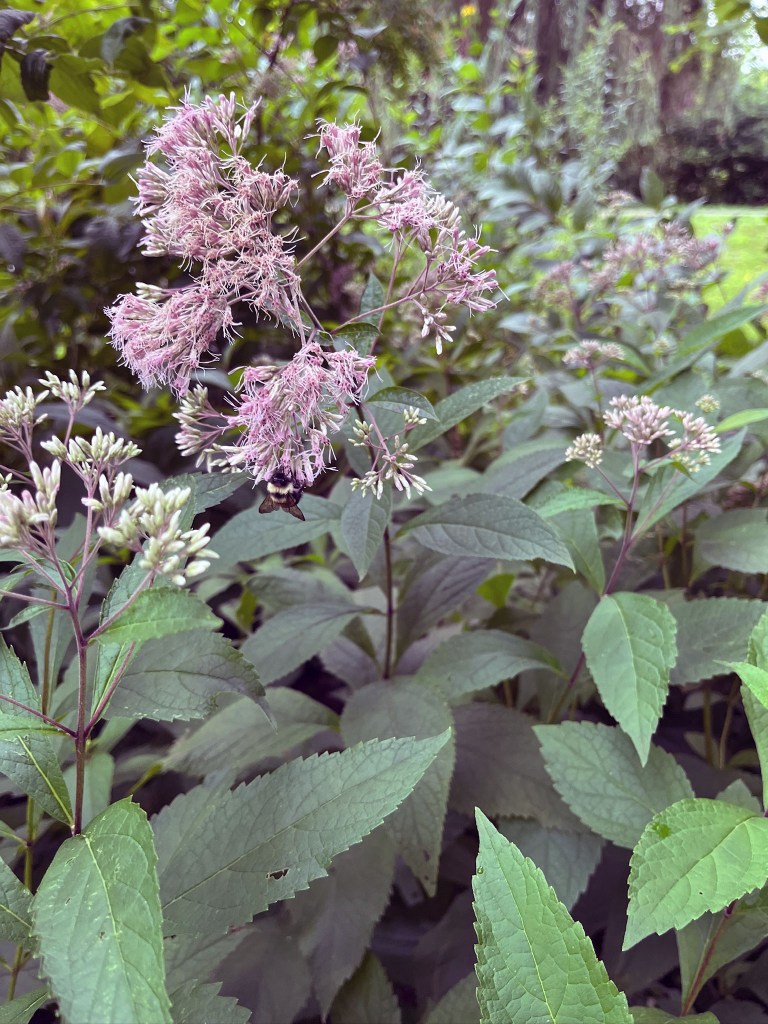
(Photo / Linda Schreiber)
Before choosing plants, consider two things: how much sunlight your garden receives (full sun, part shade, or full shade) and whether your soil is dry, moist, or clay-heavy. Matching plants to your site is the key to long-term success.
Late summer and early fall are ideal times to establish perennial natives so they can develop strong root systems before winter. Whether you’re adding a few asters or creating an entirely new pollinator bed, late-season fall blooms sustain butterflies, bees, and other beneficial insects. Look around your garden now, note where color is missing, and start planning for next spring’s pollinator display.
Flowers native to Iowa do more than provide nectar. Host plants support caterpillars and other insects that form the foundation of a healthy food web, benefiting birds and other wildlife. Gardeners can explore locally sourced plants and seeds online using the ISU Extension website and other helpful sources.

