
By Jodee Miller
This spring, as I was considering the gardening projects I wanted to accomplish this year, an interesting idea presented itself on my Instagram feed – a dead hedge.
Similar to brush piles found on many rural properties, dead hedges are a bit more contained, resembling a fence or hedge when constructed, and use dead materials versus living ones.
There are numerous ways to build a dead hedge, which is basically an upright structure made up of logs, branches, brush and twigs. They can be any length or width. A quick image search on Google showcases their many forms.
There were several reasons why a dead hedge appealed to me. My yard is mostly shaded, thanks to six 30-plus-year-old trees, which meant there would be a constant supply of building material for such a hedge. Since a full-sun wildflower bed to attract hummingbirds and pollinators wasn’t possible, I learned a dead hedge could provide shelter for birds, insects and other wildlife. The hedge would also serve as a visual shield to a neighbor’s neglected beds, and the cost would be minimal.
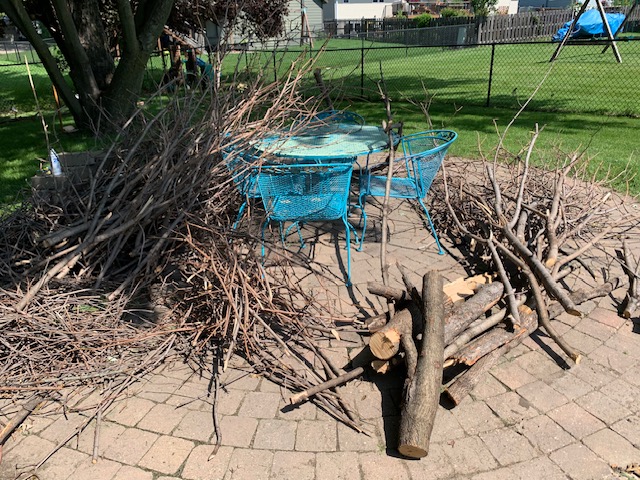
Since I usually put fallen branches and twigs out for the weekly compost-bin pick-up, I found I didn’t have enough material in early June to start this project. Mother Nature, however, lent a hand on June 10, when thunderstorms and strong winds took down three medium-sized branches from two of my trees. With the help of my lovely neighbor and his chainsaw, logs and branches were cut up and leaves removed.
The project was now a go.
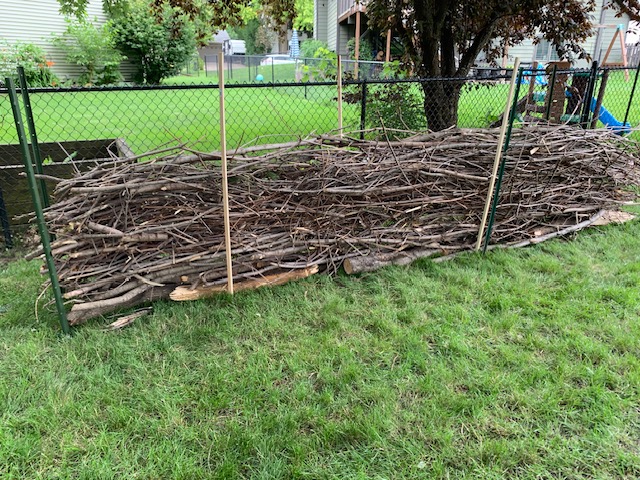
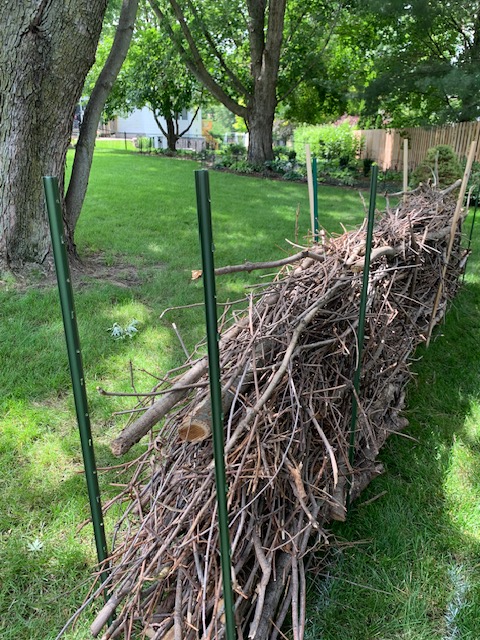
Photos by Jodee Miller
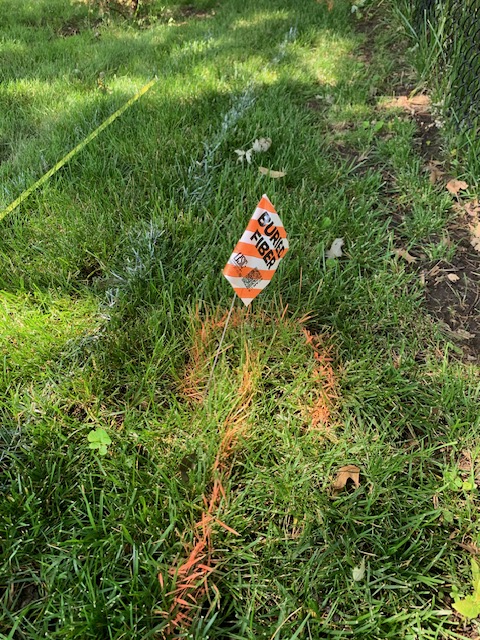
The first item to address was submitting a utility-locate ticket on IowaOneCall.com, as the dead hedge would be placed near my back fence. There are two ImOn fiber boxes in my backyard and I didn’t want to sever any cable and cause neighborhood outages. Within three days, two locators had marked all utilities, and I had the parameters for my project area.
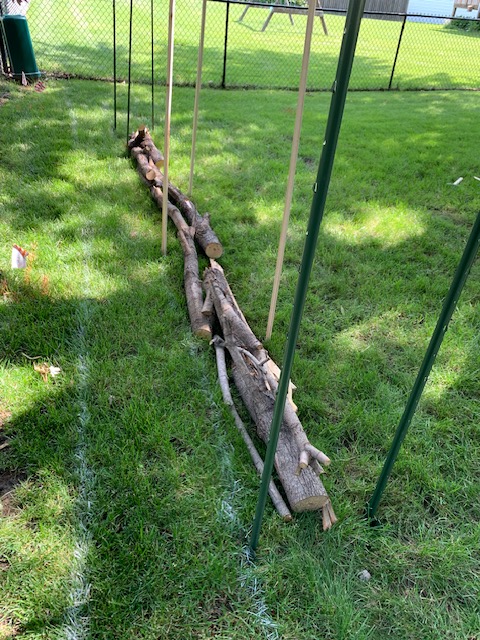
I gathered all necessary materials, supplies and tools, including some purchased wooden stakes and metal fence posts. With Mother Nature supplying adequate rain and moist, soft soil to pound in stakes, I was ready to start assembling the dead hedge.
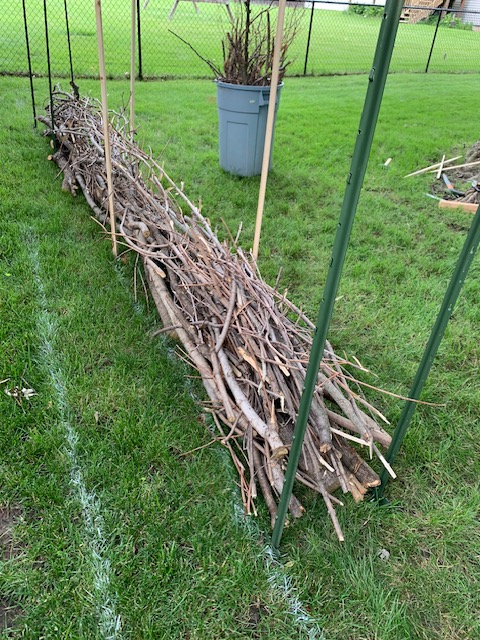
I opted for a 15-inch width and 15-foot length for the hedge, marking with spray paint at intervals where the stakes would be placed. I used steel posts at the edges and a few in the middle, and opted for wooden stakes in the remaining areas. The largest logs and branches were placed on the bottom, with subsequent branches getting smaller as I built upward. Twigs filled in the voids. Then that process was repeated, with heavier branches going on, followed by smaller ones.
I am happy with how the dead hedge came together, and after just two days, I saw a few house wrens checking it out. I am hopeful that maintenance will be minimal and that it remains a useful repository for fallen branches and a shelter for the fauna that need it.
Jodee Miller is a JCMG Class of 2025 intern.

