By Jairo Munoz
Composting in the tropics should be easy given the year-round heat and abundant rainfall. Implementing a simple, sustainable composting program in my neighborhood in Medellin, Colombia, has been complicated at times, though ultimately a success story.
The technical side of building pacas (pronounced PAHK-as) is straightforward and, in my neighborhood, has created a supportive community in which the participants believe the social benefits rival the environmental ones.
Over the past four winters, I have joined my neighbors each Sunday at a local park to compost household food scraps. We use the Pacas Biodigestivas (Biodigester Bales) method developed by Colombian botanist Dr. Guillermo Silva. This clean, oxygen-free technology uses fermenting bacteria – similar to the process that produces cheese – to decompose waste without the typical smells of rot. As Wikipedia helpfully explains, this process creates a socioecological cycle where humans, microorganisms, and insects work together to transform waste into nutrient-rich soil that feeds local plants and enhances the park’s ecosystem.
The bales process diverse organic materials, including garden debris (leaves, grass, branches) and food scraps (fruit and vegetable peels, coffee grounds), although with the exception of egg shells, they exclude animal proteins.
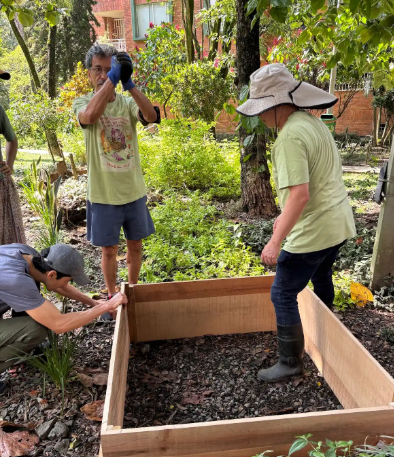
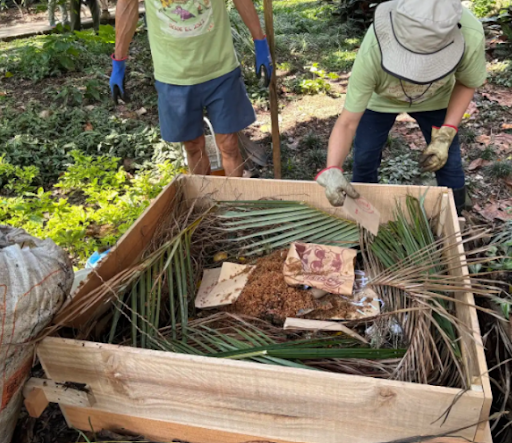
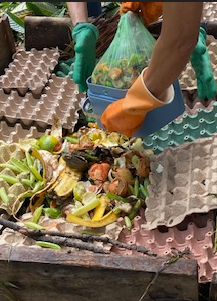
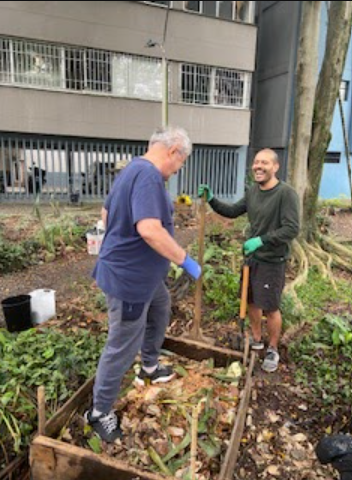
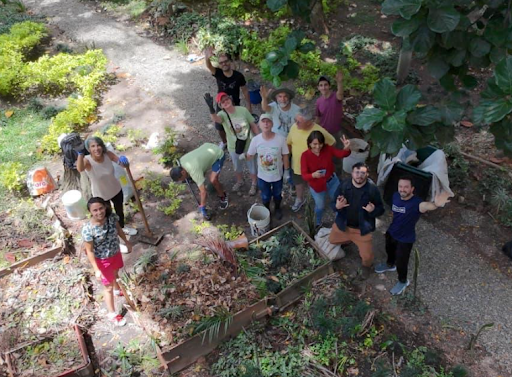
Photos/Kristine Munoz. Top photo. MG intern Jairo Munoz (standing, left) and friends set up the frame and compact the base. Middle photo: Reinforcing the sides of the paca. Right photo: Filling the nest with kitchen scraps. Bottom left: Paqueros dancing and compacting the paca materials. Bottom right:Building community. (Aerial drone photo taken by the city’s park manager.)
The Step-by-Step Process
We build each bale in layers, much like a lasagna:
- Set up a bottomless one-meter square wooden mold.
- Lay a base of branches for drainage.
- Add a layer of garden waste and compact it.
- Reinforce the edges with (palm tree) branches for stability.
- Create a nest of leaf litter in the center for organic waste.
- Fill the nest with 10-50 kg of waste, pressing it down several times to remove air.
- Cover with more leaves and compact the bale – we often do this by dancing on top!
- Repeat until the bale reaches one meter in height.
- Finish by adding soil and plants to the top, turning the bale into a planter.
- Remove the wooden mold for use on the next bale.
In six months, the result is magnificent, rich compost for our park and gardens. An added benefit is that after four years of building pacas, the ground level of the park has risen substantially, largely eliminating the standing water that once pooled in low areas after every rain.
While Master Gardeners can readily understand the benefits of composting, the general public sometimes does not. Consequently, our group of practitioners, known as paqueros (pronounced pah-CARE-os), is on a mission to educate the community.
Debate and Friction
The pacas initiative has faced three main points of friction. Some neighbors objected to the transition of open park space to one largely occupied with plants and planters, reducing the unobstructed area for dogs and children to run freely. Others considered the incorporation of food waste to be an invitation to abandon garbage in the park, leading to pests and odors. Some were concerned that dogs would dig in the pacas and spread the contents around the park. Overcoming the fear that these installations will attract rodents, emit smells, or be dismantled by dogs has required constant dialogue and visible proof that the fermenting process used in the bales is fundamentally different from rotting trash.
Proven Success and Growth
Despite these challenges, the paqueros have met for 226 consecutive Sundays, growing to over 40 active members. This consistency has transformed a technical project into a social ritual where neighbors bond over shared labor and celebrate milestones and holidays with coffee and snacks. The group has successfully navigated local bureaucracy, securing support from Medellín’s park management and various grants that provided funding and materials to expand.
Today, our park is more vibrant than ever, proving that community bonds can flourish alongside nature when neighbors commit to a sustainable vision.

