BY DOUG GERAETS
Last year’s (2022) growing season I had a major invasion of tomato horn worms on my tomato plants. I must have picked off 30 to 40 and they did some significant damage to the tops of my tomatoes. They will devour major parts of the foliage and tomatoes as they feed and grow. They also feed on peppers, potatoes, and eggplant. If you’ve never seen a tomato horn worm count yourself lucky.

on tomato plant
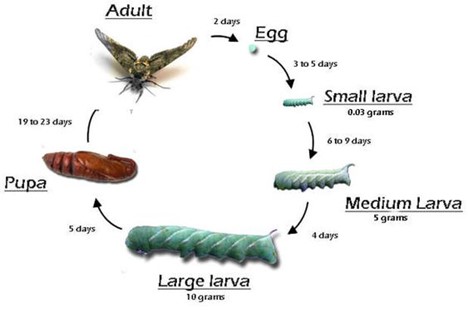
Those who have, know these worms can get 4 to 5 inches in length, as big around as a finger and can appear quite menacing (see figure). The worms are bright green in color (making them hard to spot on tomatoes) and have an intimidating horn-like hook (either red or green) on one end. In reality, they are slow moving, grasp tightly to tomato branches, and look a lot worse than they really are. After feeding they move to the soil where they pupate and over winter. The next year they transform into five-spotted hawk moths and start their cycle over again (see life cycle figure below).
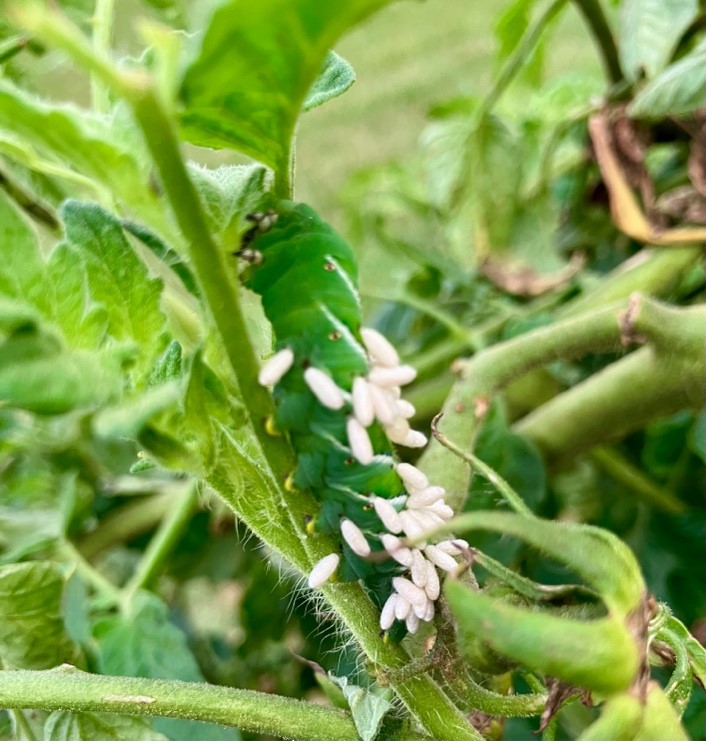
wasp pupa
This year was entirely different (remember every year seems to have a personality of its own). Maybe due to the dry weather—who knows— we hardly noticed any damage from horn worms and I only spotted two worms during the late summer/early fall. Both of those looked like the enclosed picture. People mistakenly think these are eggs that have been laid on the worm (I’ve been guilty of that) but these are actually pupa of the braconid wasp that lays eggs within the horn worm resulting in its death.
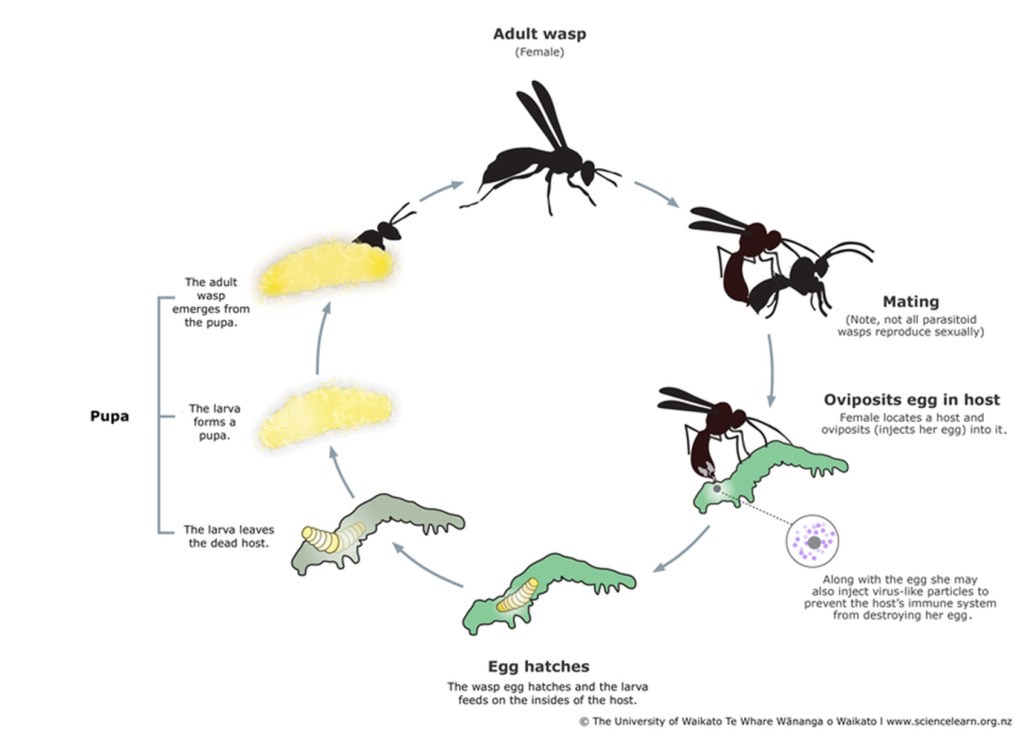
The braconid wasp is from the Braconidae, a family of parasitoid wasps. The braconids make up the second largest family in the Hymenoptera order. Braconids serve as biological pest control agents and in my garden served to help mitigate damage from the horn worms! I’ve included a figure of the life cycle of the wasp below—interesting stuff!