
Options, choices and benefits
If you are looking for a substitute for a grassy lawn that seemingly does nothing for the environment, you’re not alone. The trend in front yards is au naturel.
With concerns about climate change and water law restrictions, homeowners are interested in drought-resistant lawns. No-grass lawns use less water and don’t rely on chemicals that end up where they’re not wanted and often harm the environment.
Compact and casual, cottage gardens provide a somewhat chaotic mixture of flowers, herbs and vegetables, with trees and other plants. Meadowscapes are natural but with more colorful flowers blooming throughout the year. Another option might be a prairie or ornamental grasses. Grasses give movement and texture and grow quickly. Blue grama, little blue stem and prairie dropseeds are excellent choices and provide winter interest.
Native plants indigenous to Iowa are always good choices for the ecosystem. They require less moisture and support wildlife. A wildflower garden is not only beautiful but will attract bees, butterflies, birds and bugs. Native forbs provide colorful displays. Choose plants that have beautiful seed heads for birds to feed on as they migrate through the area.
Another beautiful grass substitute option that offers texture and color is low-water ground covers. Succulent gardens can also be carried outdoors successfully and they’re a good choice for dry, rocky or well-draining soils.

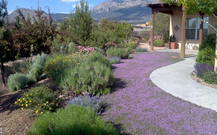
Xeriscaping helps minimize or eliminate the need for irrigation by using drought-tolerant plants and other water-saving techniques that promote water conservation and create sustainable landscapes.
A pollinator garden station with bird baths, hummingbird and squirrel feeder stations, and native plants surrounding the feeder stations is another good substitute.
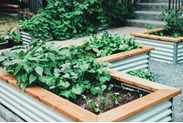
Homeowners might consider adding raised garden beds to incorporate edible elements to transform the front yard into an agricultural space.
In our Iowa climate, evergreen shrubs and plants are well-suited for winter survival.
When planning your front scape, a key to a pleasant appearance incorporates differing heights using tiers, benches and layered garden beds. Including a natural element with stones or bricks provides a decorative element, as well as, boundaries and pathways.
Adding mulch always helps establish an organic appearance without adding maintenance or much expense.
Be considerate of your neighbors by avoiding elements that might be annoying. Those features might include motion lights, above-ground pools, yard structures they might think unsightly, or water features that may attract mosquitos. While firepits can add value to a home, drifting smoke can be problematic for nearby neighbors.
Before you begin shopping for your property’s new look, always do your research to ensure you will be happy with the results.
Sources:
https://naturalresources.extension.iastate.edu/wildlife/landscaping-wildlife
https://extension.missouri.edu/publications/g6905
https://www.finegardening.com/article/designing-a-lawnless-front-yard
https://www.bhg.com/landscaping-ideas-for-front-yard-on-a-budget-7105082
 Johnson County Master Gardeners of Iowa