
BY LINDA SCHREIBER
One of the greatest challenges facing the world is environmental sustainability. If you were raised in the Midwest like me, you know our state is one of the world’s most productive agricultural regions. However, since settling in the mid-1800s, Iowa has lost nearly 7 inches of topsoil, according to the USDA Natural Resources Conservation Service. Iowa State University agronomy professor Richard Cruse says as the topsoil thins, soil productivity declines, resulting in potential yield losses.

Soil is a major interest of Johnson County Master Gardener volunteer John Weeg. An admitted soil enthusiast, his appreciation for the soil has only grown because “that’s where gardening starts.”
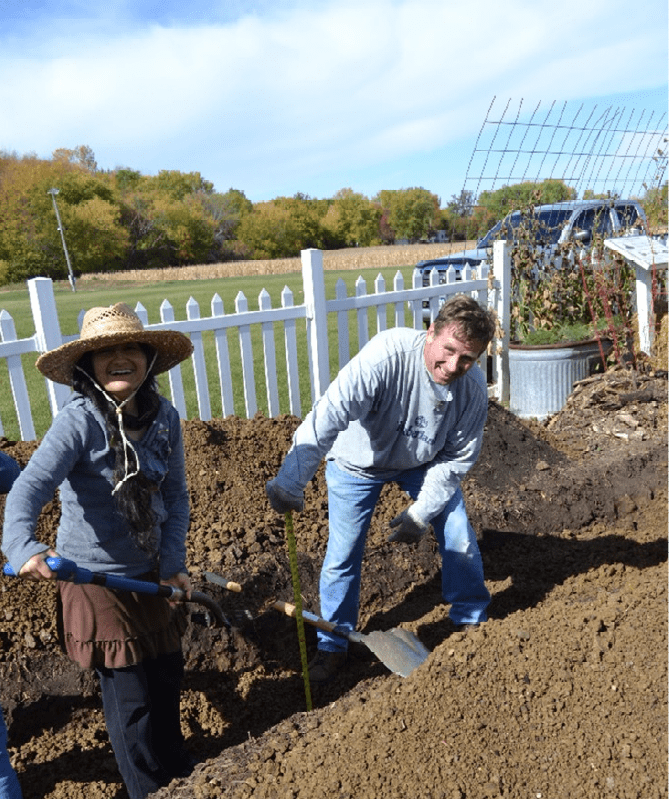
Last summer, while working in the demonstration garden at the Johnson County Fairgrounds, he noted the garden required daily watering to thrive. John deduced the unusually heavy watering requirements were likely due to soil compaction which prevented the soil from absorbing needed moisture, prompting frequent watering – maybe too frequent.
The solution, he thought, was to employ a hügelkultur (pronounced hyoo-gul-kulture) berm in the garden and make side-by-side comparisons during the 2023 growing season to determine if this hypothesis was correct.
In German, hügelkultur translates to “mound” or “hill culture.” A well-built hügelkultur is a self-watered, self-composting raised garden with few irrigation and fertilization needs. The technique utilizes burying wood and plant debris to build a nutrient-rich mound for gardening and one that John expects will improve the soil.

Last October, John led efforts of nearly 20 Master Gardeners to learn about and create a hügelkultur in the demonstration garden. Preparing the soil in the fall, he said, will allow it to rest and begin to recover during the winter months. He started the process by assembling all the needed materials—two loads of compost from the Iowa City Landfill, loads of dried manure from an area farmer, plant debris from gardens, and green and aged wood.
While holding a plant displaying roots extending horizontally, not vertically, during the hands-on workshop, John says the roots of plants must go further down into the soil to draw needed moisture and nutrients.
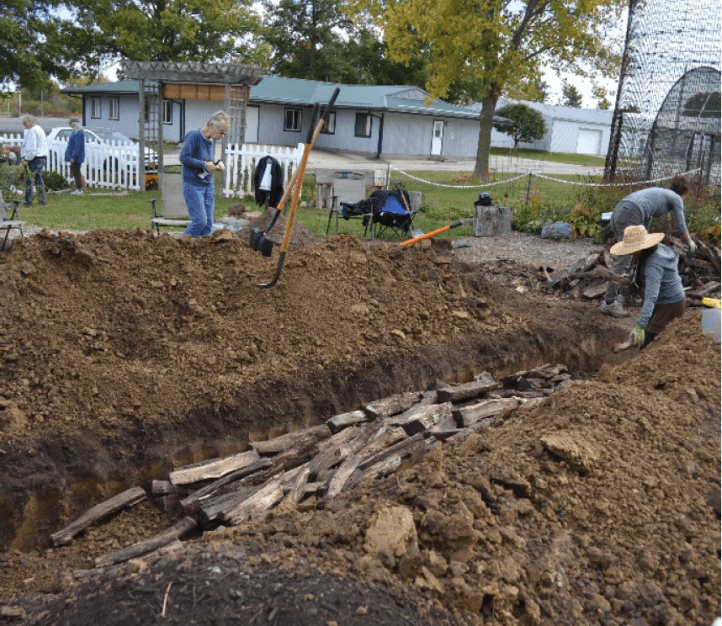
He added hügelkultur is permaculture—an approach to land management that benefits natural ecosystems. The practice improves the soil – the organic matter buried inside the mound will self-compost over time. Sequentially layering buried materials beneath the soil generates a sustainable, natural process that’s also a tool for carbon sequestration and makes use of landscape debris that might otherwise be landfilled.
John measured an area for the three gardens aligned side-by-side and began digging. The trench, 4 feet wide by 24 feet long, was rototilled. Next, a team of Master Gardener volunteers removed the rototilled soil, and the strip was rototilled again and that soil removed. The rototilling and soil removal process continued until a depth of 30 inches was reached. That effort, John said dug through multiple layers of soil, sand and clay to reach the project’s goal: black earth located below the compacted clay.
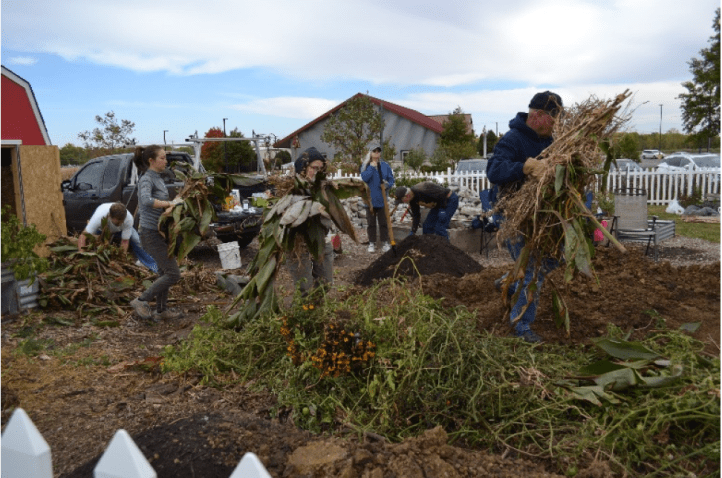
Once the correct depth was reached, the Master Gardener team began layering materials in the newly-formed trench. First green wood, followed by aged or decaying wood, followed by compost alternated with dried manure, and a large quantity of plant debris including canna stalks and tomato vines, followed by more compost and manure, and finally the remaining compost and manure. The berm was topped off with a layer of straw to hold everything in place.
When the process was completed, Master Gardener Sadia Embree declared, “that (the process) was fun. We should do a hands-on project every year.”
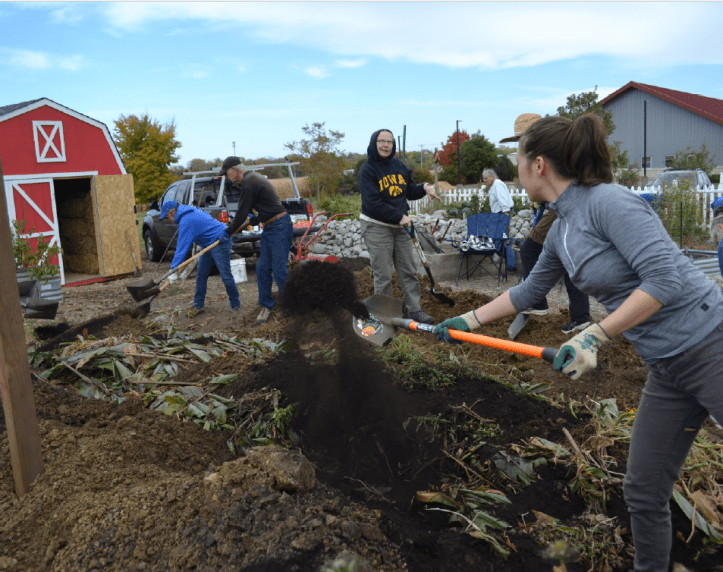
John says the second garden contiguous to the berm was rototilled with compost and manure added. The third garden was rototilled but compost and manure were not added. In May 2023, produce was planted in each of the three test gardens and each test garden will be checked to determine watering requirements and growth habits.
If the project goes as John expects, more hügelkultur berms may be added to the demonstration garden and perhaps in other Master Gardener projects.
Note: Johnson County Master Gardeners celebrated 40 years of service to the area in 2022.
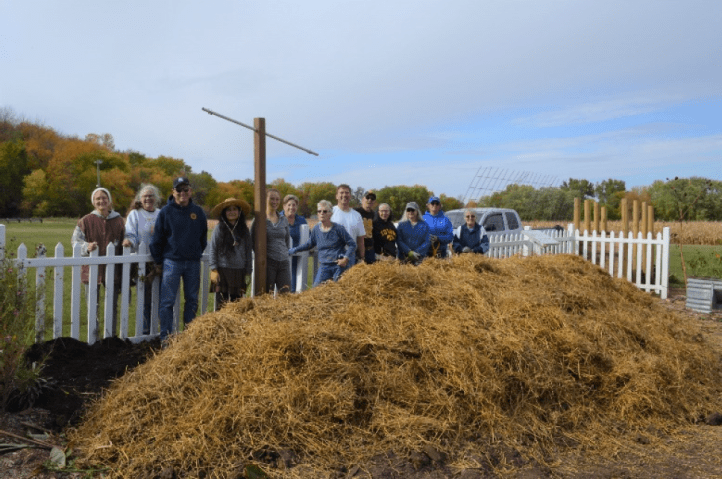
 Johnson County Master Gardeners of Iowa